
"tropical island coffee"
2000 article(s) found

Ecuadorian coffee with different flavors Taste Manor Introduction Hasenda Coffee Garden
Western coastal areas: including coastal plains and foothills, east high west low, generally below 200 meters above sea level, there are some hills and low mountains 600~700 meters above sea level. Tropical rain forest climate, the southernmost start to transition to a savanna climate. The annual average precipitation decreases from more than 3000 mm to about 500 mm from north to south. The Andes range from Colombia to Ecuador.
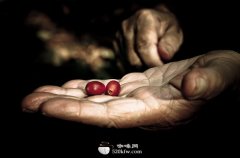
Roast Fine Coffee in Chongqing-- Hawaiian Coffee
Chongqing boutique coffee roasting Hawaiian coffee Hawaiian islands are located south of the Tropic of Cancer, across latitudes of 19 to 22 degrees, is a unique coffee growing area. Hawaii is the 50th state in the United States, 2400 miles from the west coast of the United States, and is the only state in the United States that produces coffee. The coffee produced in Hawaii is famous all over the world and is regarded as one of the best in the world. Hawaii holds

A variety of sun products from the Ubu processing plant of Karana Jinta Mani volcano in Bali, Indonesia.
In the traditional culture of Bali, coffee is used as a cheap beverage raw material. The flavor and quality of the region have been unstable or depressed, and most of them have become cheap commercial beans. Barista Rodney and his partners decided to change the local people's stereotype of coffee. They chose the cultural center of Bali-the Wubu Market area, and opened the island.

Introduction to the fragrant Ecuadorian Coffee Flavor and the Fine Coffee in the Manor area
The country is divided into three parts: the western coast, the central mountainous region and the eastern region. Map of Ecuador the western coast of the map of Ecuador: including coastal plains and foothills, high in the east and low in the west, generally below 200 meters above sea level, with some hills and low mountains at an altitude of 600 to 700 meters. Belongs to the tropical rain forest climate, the southernmost end begins to transition to the savanna climate. The average annual precipitation from north to south is 3.

Island Coffee area-Kona ExtraFancy, Hawaii, what is the relationship between White House Coffee and White House Coffee
Professional coffee knowledge exchange more coffee bean information please follow the coffee workshop (Wechat official account cafe_style) front street-Hawaii Cona Extra Fancy introduced KONA is produced in Hawaii, the largest island of Hawaii, located in the 4200-meter-high Mauna Kea Shanxi side of the hillside of the KONA area, the climate of the tropical rain forest is quite rich in annual rainfall, coffee trees are planted in fragmented volcanoes

Introduction of a coffee producer in Papua New Guinea, an island country in the western South Pacific
Papua New Guinea is an island country in the western South Pacific and a member of the Commonwealth. The name of the country consists of Papua and New Guinea. There are many small islands here, about 600 in size. It is adjacent to Indonesia and Australia to the south. It belongs to the Asia-Pacific region, but it is a country in Oceania. Located in the tropical climate, high temperature and rainy. Rich and rich volcanic rock and soil

Sun planting situation of Fine Coffee beans Karana Jinta Mani Volcano Ubu processing Plant in Bali, Indonesia
Flavor description: raw beans exude strong cantaloupe and tropical fruit aromas; the entrance flavor changes to the sweetness of pineapple and strawberry jam, showing smooth and rich acidity at medium and low temperatures, with aromas of handmade black sugar, exquisite dark chocolate and hazelnut; the overall flavor is excellent, like syrup-like texture and sweet taste, and the ripe fruit flavor of the sun even surpasses many of China and the United States.

Introduction of Fine Coffee beans in Galapagos Coffee Manor, Ecuador
West coast: including coastal plains and foothills, high in the east and low in the west, generally below 200 meters above sea level, with some hills and low mountains at an altitude of 600 to 700 meters. Belongs to the tropical rain forest climate, the southernmost end begins to transition to the savanna climate. The average annual precipitation decreases from more than 3000 mm to about 500mm from north to south. Central Mountains: the Andes enter Ecuador from Colombia

Starbucks Collection Sumatra Coffee Bean characteristics Starbucks selected Glinchi Coffee Bean Story
Professional coffee knowledge exchange more coffee bean information please follow the coffee workshop (Wechat official account cafe_style) Sumatra is a verdant green island, all kinds of tropical plants cover the whole territory, full of vitality. The overlapping mountains are flooded by primeval forests, and the river as flat as a mirror is surrounded by tall coconut trees, whether in cities, villages, fields and roads

The current situation of Hawaiian Kona coffee cultivation, why is Hawaiian Kona coffee so expensive?
For information, please pay attention to Coffee Workshop (Wechat official account cafe_style) the trade wind blows the only coffee-producing state in the United States, the Hawaiian Islands is a perfect coffee-growing area, and the Kona coffee beans produced are internationally renowned and regarded as one of the best coffees in the world. Volcanic soil and tropical climate, supplemented by slight humidity and regular afternoons

Introduction to the characteristics of Dominican Coffee Flavor and Taste Manor
In December 1492, Christopher Columbus arrived on Hispaniola on his first voyage. On his second voyage there in 1493, Santo Domingo became the capital of the island. [3] thousands of Tainos were demoted to slavery and engaged in gold mining. Due to a series of oppression, hunger and disease, by 1535, the Tino had only 60,000 left. 1501, Spain

Introduction of characteristic flavor of Babu coffee
Taste characteristics: full particles, moderate acidity, mellow taste. Papua New Guinea is an island country in Oceania. Papua means curly hair in Malay. It is said that in 1545, the explorer Retes arrived on the island and found that most of the people's hair on the island was curly, that is, the island was called the island of curly hair, so the name was handed down. Located in the tropics

Introduction to the characteristics of palatability treatment methods of smooth and fragrant Hawaiian Coffee
The Hawaiian islands are formed by volcanic eruptions, including 8 large islands and 124 small islands, stretching for 2450 kilometers, forming a crescent-shaped island chain. Hawaii is the largest island, with two active volcanoes. The climate is mild and pleasant all the year round, the precipitation is greatly affected by the topography, there are great differences in different places, and the forest coverage rate is nearly 50%. Honshu is made up of nineteen major islands and coral reefs, located in the middle

Which Hawaiian coffee is good? how do you make Hawaiian coffee? what's the flavor of Hawaiian Kona coffee?
Professional coffee knowledge exchange more coffee bean information please follow the coffee workshop (Wechat official account cafe_style) Hawaii's coffee bean reputation mainly comes from Kona. If you like typical island coffee with less acidity, more consistency and less fruit flavor, other islands are also worth exploring. Over the years, the Big Island of Hawaii has been rated internationally.
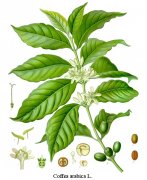
Coffee cultivation technique A tropical cash crop that is easy to cultivate
Coffee, cocoa and tea are called the three major beverages in the world, and their output, consumption and output value all rank first. In addition to being used as a beverage, coffee can also extract caffeine and coffee oil; in medicine, it can be used as an anesthetic, stimulant and diuretic cardiotonic agent. Coffee pulp can be used to make wine, vinegar, pectin and molasses; dried pulp can be used as animal feed; dried fruit shell can be used as fertilizer and burning

Characteristics of Puerto Rican Coffee Variety producing area introduction of Fine Coffee Bean Flavor Manor
Puerto Rico covers an area of 13790 square kilometers, with mountains and hills accounting for 3x4 of the island. The central mountain range stretches from east to west, stretching from Puerto Rico to Puerto Rico, from high to low, with the coast as a plain. The highest peak, Mount Pengta, is 1338 meters above sea level. Belongs to the tropical rain forest climate, [8] the rainfall is sufficient, the average temperature in January is 24 ℃, the average temperature in July is 27 ℃. Vulnerable to hurricanes

Coffee bean boutique manor Indonesia Bali coffee bean manor Indonesian coffee beans
BaLi Island is a famous tourist area in Indonesia, more than 1000 kilometers away from the Indonesian capital Jakarta, across the sea from Java Island where Jakarta is located. Bali covers an area of more than 5560 square kilometers and has a population of about 3.15 million. Bali is in the tropics with a hot and humid climate. Bali is mostly mountainous, with vertical and horizontal mountains, high in the east and low in the west. There are still four or five on the island.

Introduction to the characteristics of Dominica Coffee Flavor and taste Manor
In 1677, about 4,000 French lived in 11 villages in the west of the island. In 1697, France and Spain ceded the western part of the island to France according to the Leswick Treaty of the Alliance War, formally recognizing French sovereignty over Haiti in the western part of the Spanish island, and the eastern part of the Spanish island was called East Santo Domingo. France continues to develop its agricultural economy on the island of Hispaniola.

Introduction of boutique coffee beans in Dominica Santo Domingo coffee producing area
The earliest coffee in Dominica was introduced from Martinique (the overseas province of France), dating back to the early 18th century. Dominica is an island country with a tropical climate. The temperature changes little throughout the year. Except for the lower temperature in the Central Cordillera Mountains, which can reach less than 0 ℃ in winter, the annual average temperature in other areas is between 25 and 30 ℃, which is affected by the mountain topography.

A brief introduction to the history and culture of the origin and development of Ecuadorian boutique coffee beans with balanced and refreshing taste
However, Thomas will never know that the island they landed on is the only island in the Galapagos Islands with plenty of fresh water. It is today's St. Cristobal Island (Saint Cristobal), a well-known South American brand, Ecuadorian Grade A coffee, with a large state-run seed value garden; 100% from the 1300-2000 m high natural vegetation zone, popular in Europe and the United States.